


How should CFOs measure the return on IT investments in 2026?
In 2026, CFOs evaluate IT ROI by looking beyond hardware and software costs. Modern technology investments should be measured by their impact on productivity, cybersecurity risk reduction, operational efficiency, and business continuity.
Why is measuring IT ROI more complex today?
Technology now supports nearly every part of business operations—from cybersecurity and cloud infrastructure to remote work and compliance. Because IT affects productivity, risk management, and revenue protection, CFOs must evaluate both financial returns and operational benefits.
What should financial leaders expect from IT investments?
CFOs should expect measurable improvements in efficiency, reduced downtime, stronger cybersecurity protection, and scalable infrastructure that supports business growth.
The CFO’s Expanding Role in Technology Decisions
Over the last decade, the role of the Chief Financial Officer has expanded beyond budgeting and financial reporting. CFOs are now key decision-makers in technology strategy.
This shift happened because IT spending has grown significantly across nearly every industry. Cloud services, cybersecurity solutions, compliance systems, and remote work infrastructure now represent major operational investments.
Financial leaders must evaluate whether these investments truly support the organization’s long-term goals.
The challenge is that traditional ROI calculations do not always capture the full value of modern IT services.
Why Traditional IT ROI Calculations Fall Short
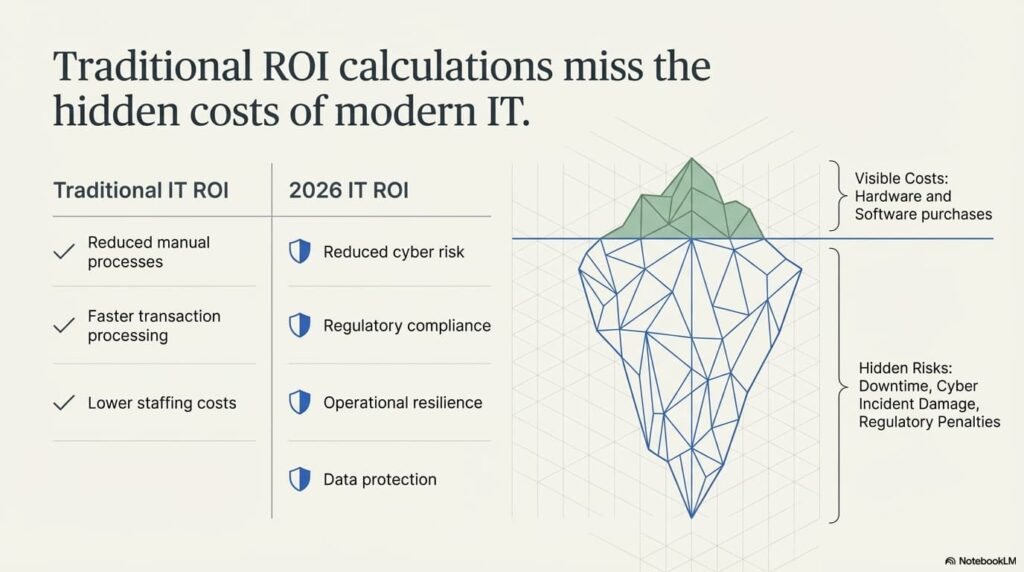
Historically, IT ROI was calculated by comparing the cost of technology against measurable productivity gains.
For example:
• Reduced manual processes
• Faster transaction processing
• Lower staffing costs
While these metrics still matter, modern IT delivers value in additional ways that are harder to quantify but critically important.
Examples include:
• Reduced cybersecurity risk
• Improved regulatory compliance
• Greater operational resilience
• Protection of sensitive business data
When evaluating technology investments in 2026, CFOs must include both financial returns and risk mitigation benefits.
Key Metrics CFOs Should Track for IT ROI
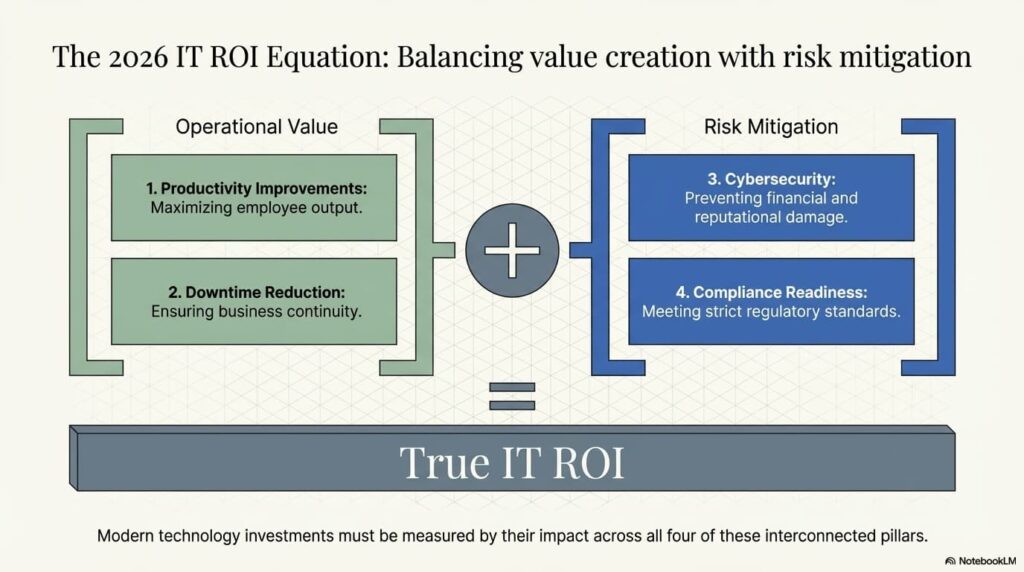
Forward-thinking financial leaders track several performance indicators when evaluating technology investments.
Productivity Improvements
Modern IT infrastructure helps employees work faster and more efficiently.
Indicators include:
• Faster system performance
• Reduced IT support requests
• Improved collaboration tools
• Faster onboarding for new employees
When employees spend less time dealing with technology problems, productivity increases across the organization.
Downtime Reduction
System outages can disrupt operations, delay projects, and impact customer service.
Monitoring downtime metrics helps CFOs understand the value of proactive IT management.
Key indicators include:
• Frequency of system outages
• Average resolution time for technical issues
• Business hours affected by downtime
Reducing downtime protects revenue and keeps operations running smoothly.
Cybersecurity Risk Reduction
Cybersecurity incidents can cause major financial damage, including regulatory penalties, operational disruptions, and reputational harm.
Investments in security tools, monitoring, and employee training significantly reduce this risk.
Many organizations now evaluate IT ROI partly based on how well their systems prevent cyber incidents.
Compliance and Regulatory Readiness
Organizations handling regulated data must meet strict cybersecurity and privacy requirements.
Compliance frameworks often require:
• Access controls
• Audit logging
• Incident response procedures
• Encryption for sensitive data
These controls help organizations maintain regulatory compliance and protect sensitive information.
Businesses working with government agencies or defense contracts, for example, may need to follow cybersecurity standards such as NIST SP 800-171 and CMMC certification requirements.
Maintaining compliance reduces legal risk and protects business relationships.
The Financial Impact of Proactive IT Management
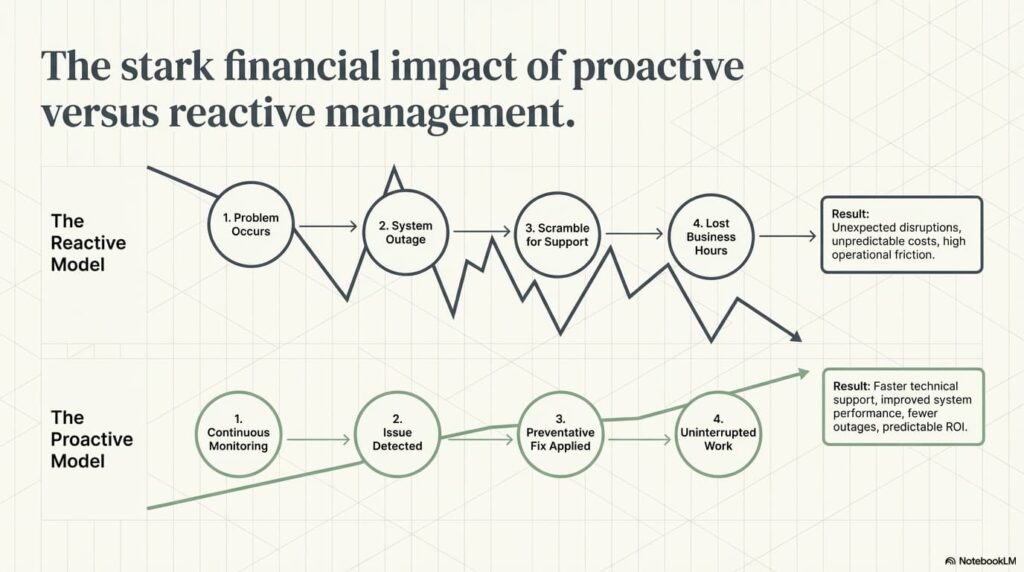
Many CFOs are shifting toward managed IT services because proactive support often delivers stronger ROI than reactive IT models.
Instead of fixing problems after they occur, proactive IT management focuses on prevention.
Benefits include:
• Fewer system outages
• Faster technical support
• Improved system performance
• Better cybersecurity monitoring
This approach reduces unexpected disruptions and improves operational stability.
How CFOs Can Align IT Investments with Business Strategy
One of the most effective ways to evaluate IT ROI is by aligning technology decisions with business objectives.
CFOs should ask several strategic questions when reviewing technology investments.
Does the Technology Improve Operational Efficiency?
Technology should simplify processes, automate repetitive tasks, and improve collaboration between teams.
Does the Investment Reduce Business Risk?
Cybersecurity tools, backup systems, and monitoring platforms protect the organization from operational disruptions.
Does the Solution Support Growth?
Scalable infrastructure allows companies to expand operations without constantly replacing systems.
Does the Technology Improve Employee Productivity?
Systems that work smoothly allow employees to focus on business priorities rather than technical issues.
When IT investments align with these goals, their value becomes much easier to measure.
Why Businesses Partner with HD Tech for Strategic IT Support
HD Tech works with organizations that want technology to support business growth, operational efficiency, and security.
Based in Orange County, California and supporting companies throughout the United States, HD Tech provides proactive IT services designed to reduce downtime and strengthen cybersecurity.
Organizations benefit from:
• Responsive help desk support
• Proactive system monitoring
• Cybersecurity awareness and protection
• Scalable IT infrastructure
• Guidance on technology strategy
By aligning IT support with business objectives, companies can gain measurable value from their technology investments.
The Future of IT ROI Evaluation
As technology continues to evolve, CFOs will play an even larger role in IT strategy.
Future IT ROI evaluations will likely focus on:
Business Continuity and Resilience
Organizations are prioritizing systems that keep operations running during disruptions.
Security and Risk Management
Cybersecurity investments will continue to be evaluated as risk reduction tools.
Data-Driven Decision Making
Analytics tools will help organizations measure productivity improvements and operational efficiency more accurately.
Strategic Technology Partnerships
Many companies will rely on experienced IT partners to guide long-term technology planning.
For financial leaders, the goal is clear: ensure technology investments deliver measurable value while protecting the organization from operational and security risks.
Frequently Asked Questions About IT ROI for CFOs
What does IT ROI mean for financial leaders?
IT ROI refers to the measurable value an organization receives from its technology investments. This includes productivity improvements, operational efficiency, reduced downtime, stronger cybersecurity, and improved compliance with industry regulations.
How can CFOs measure the financial impact of IT investments?
CFOs often track metrics such as downtime reduction, system performance improvements, employee productivity gains, and security incident prevention. These indicators help financial leaders determine whether technology investments support long-term business goals.
Why is cybersecurity considered part of IT ROI?
Cybersecurity protects organizations from financial losses caused by cyberattacks, data breaches, and operational disruptions. Preventing incidents helps avoid costly downtime, regulatory penalties, and reputational damage.
Should CFOs be involved in IT decision-making?
Yes. Technology investments now affect nearly every part of business operations. CFOs help ensure technology spending aligns with financial strategy and delivers measurable value for the organization.
Can outsourced IT services improve IT ROI?
Many organizations find that managed IT services improve ROI by providing proactive monitoring, experienced technical support, and scalable infrastructure without the overhead of building a large internal IT department.
Make Technology Investments Work Smarter for Your Business
Technology should support productivity, security, and business growth—not create unnecessary complexity.
HD Tech helps organizations implement reliable IT systems, strengthen cybersecurity, and ensure technology investments deliver real business value.
To learn how strategic IT support can improve operational efficiency and reduce technology risks, contact HD Tech today.
Call 877-540-1684 to speak with an IT specialist and explore smarter technology solutions for your organization.
Areas ServedHD Tech is headquartered in Orange County, California, serving businesses in Irvine, Anaheim, Santa Ana, Newport Beach, Huntington Beach, and surrounding communities while providing IT and cybersecurity services nationwide across the United States.