


Why HIPAA still matters in a post-pandemic, cloud-first world
As healthcare organizations accelerate digital transformation, HIPAA remains a core compliance framework—not just a legal obligation, but a business-critical standard. In 2026, the law continues to evolve in response to telehealth expansion, third-party integrations, and increasing cybersecurity threats.
For CEOs, understanding HIPAA isn’t just for the compliance team. It’s essential for risk management, patient trust, and operational continuity.
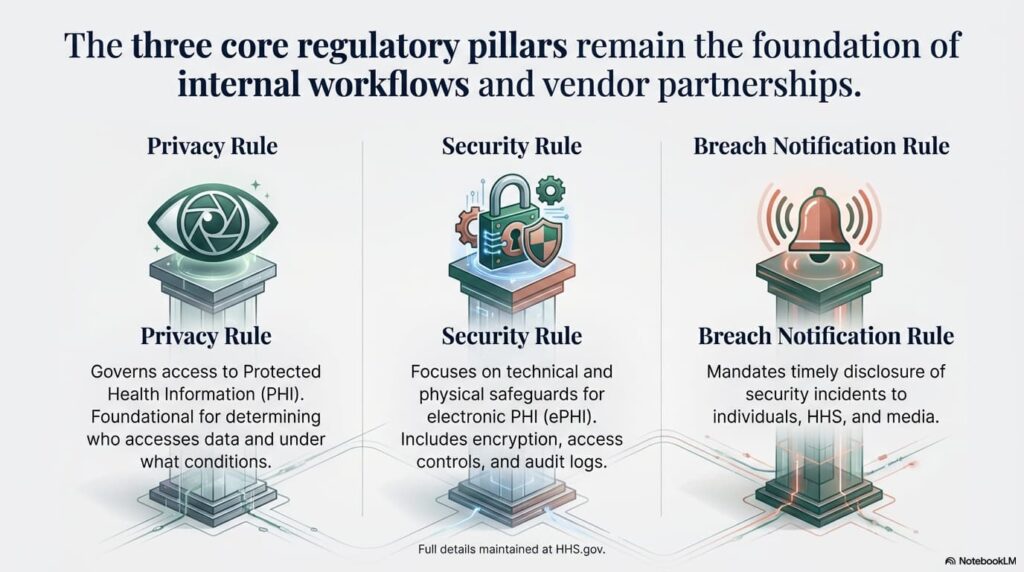
HIPAA’s Three Core Pillars, Still Relevant Today
Every CEO should understand the three HIPAA rule sets:
- Privacy Rule: Governs who can access Protected Health Information (PHI) and under what conditions. Still foundational for internal workflows and vendor partnerships.
- Security Rule: Focuses on the technical and physical safeguards needed to protect ePHI (electronic PHI). This includes encryption, access controls, audit logs, and device security.
- Breach Notification Rule: Requires timely disclosure of security incidents involving PHI to affected individuals, HHS, and, in some cases, the media.
Full details are maintained at HHS.gov.
What’s New in 2026: Key HIPAA Updates
While the core of HIPAA hasn’t changed dramatically, there are new expectations for enforcement and cyber risk readiness, including:
- Stronger pressure on organizations to prove “minimum necessary” access controls
- Greater scrutiny on third-party service providers and cloud platforms
- Emphasis on incident response testing and audit trails
- Expectations for annual risk assessments and documented remediation plans
- Proposed rulemaking that may affect how telehealth data and mobile health apps are governed
CEOs must ensure their executive teams are budgeting not just for compliance tools, but also for staff training, documentation, and third-party risk management.
The Cost of Non-Compliance Isn’t Just Fines
While HIPAA violations can result in substantial financial penalties, the bigger threat is reputational and operational. A single breach can:
- Damage patient confidence and loyalty
- Trigger lawsuits or contract termination
- Disrupt operations if systems are taken offline during recovery
- Draw attention from OCR or other federal regulators
Healthcare organizations of all sizes — from private practices to hospital systems — are being audited more frequently and expected to demonstrate active, not passive, compliance.

How HD Tech Helps CEOs Build a HIPAA-Ready Enterprise
HD Tech partners with healthcare providers across Southern California to implement scalable, compliance-aligned IT infrastructure. Our services include:
- HIPAA risk assessments with actionable remediation planning
- Endpoint protection and access controls across devices and cloud platforms
- Secure Microsoft 365 deployments with email encryption and audit capabilities
- Disaster recovery and data backup aligned with Security Rule safeguards
- Staff cybersecurity training tailored for medical environments
We help healthcare leaders build resilience, not just reports — so compliance supports continuity, not just checkboxes.
Smart FAQs
How often should HIPAA risk assessments be conducted?
At least annually, or after any major system changes. OCR expects documented risk analyses and remediation tracking.
Does HIPAA apply to cloud platforms like Microsoft 365 or Google Workspace?
Yes. Cloud providers are considered Business Associates and must sign a Business Associate Agreement (BAA) while meeting Security Rule requirements.
Can HD Tech support both small clinics and large health systems?
Yes. We tailor solutions based on your size, infrastructure, and exposure — ensuring HIPAA readiness at any scale.
What’s the difference between IT compliance and IT security?
Compliance is about meeting defined standards. Security is about protecting data. The best strategies integrate both.
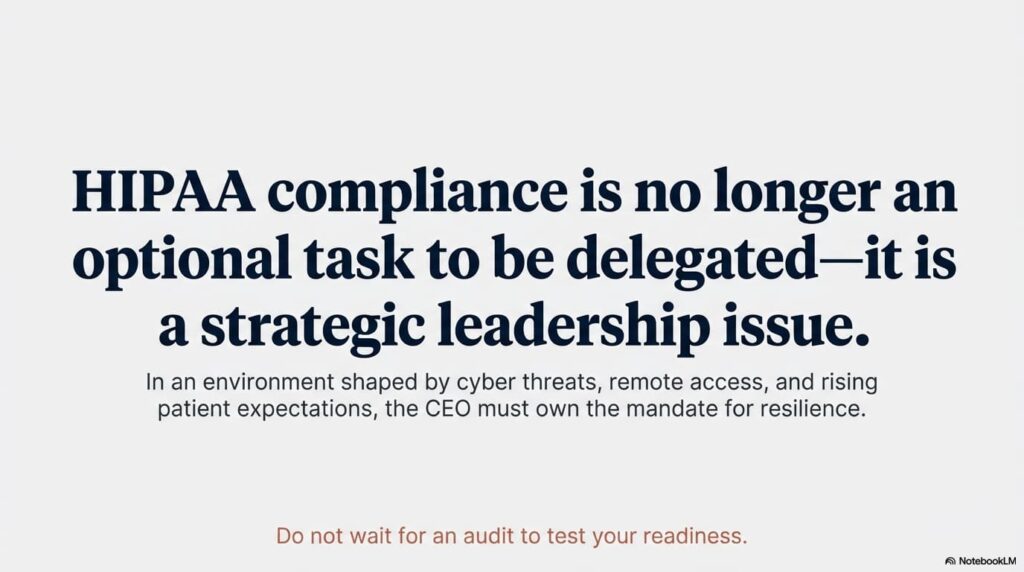
Compliance Is a CEO-Level Concern
In a healthcare environment shaped by cyber threats, remote access, and rising patient expectations, HIPAA compliance is no longer optional or delegated — it’s a strategic leadership issue. Contact HD Tech to schedule your HIPAA readiness assessment and ensure your IT supports every aspect of compliance.